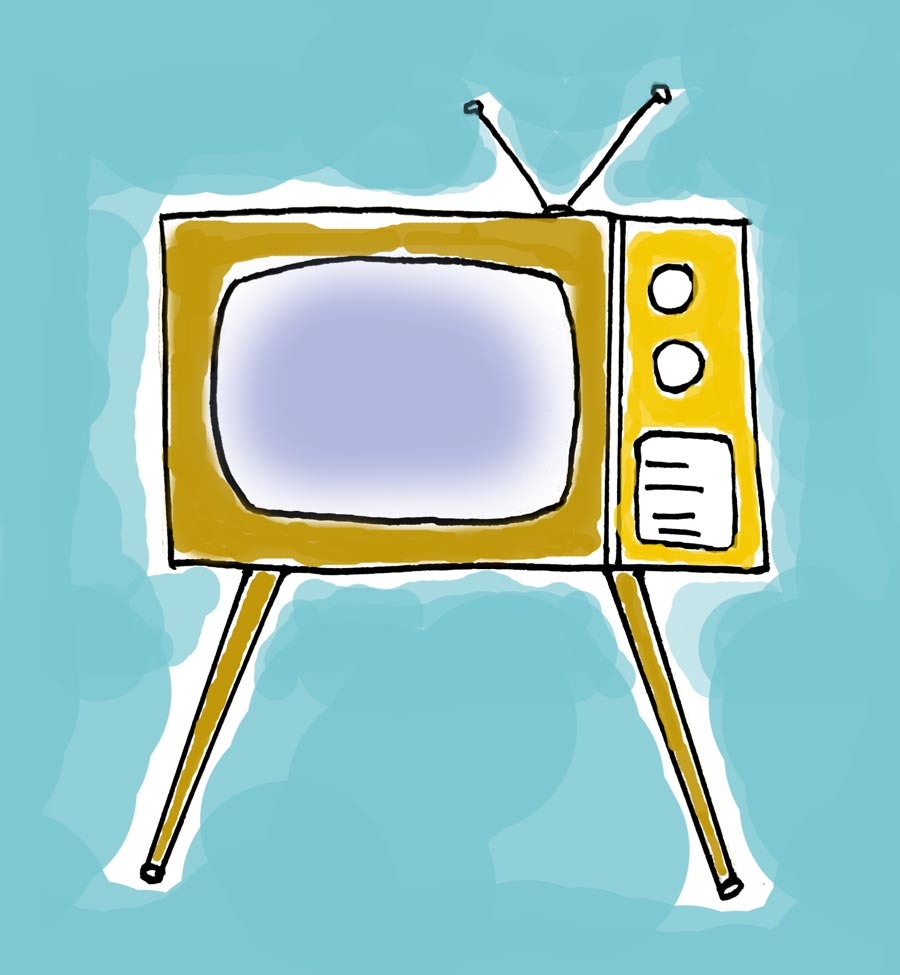
Bulky TVs with dials
THE WAY WE WERE
A Nostalgic Look Back at Everyday Life in the 1970s-80s Before Digital Technology Took Over
― by RALPH WILLIAMS
Illustrated by Grace McEvoy
It was the best of times, it was the silliest of times – that heavily hair-sprayed and status-conscious era of the 1970s and 80s. I grew up in that period, and I survived the silly instant “space food”, the toxic spray of the mosquito trucks, and the cigarette smoke circulating on airplanes. So I speak from personal experience when I say, it was very different back then. In fact, we have traveled so far into this brave new world of cell phones and online everything that it’s hard to even recall that former way of life. It seems so far away now that, when I reflect back or reminisce with friends, it feels like a fever dream in a past life in a distant galaxy.
If you were born in the 1990s and think you have a good idea of what that bygone world was like because you were born close to it, you really don’t. The internet arrived on the scene in the mid-90s and started changing things so quickly that by the late 90s and the early aughts, that whole other way of doing things was long gone by the time you were coming of age. But this is part of the point of this article–to conjure up the past, not only for folks in their 50s, 60s, and above, but also to show you younger folks what you missed out on and what you might be able to recreate in some new form as we head into the future. So get ready people! Get your 3-D glasses and your white bell-bottoms on because we’re taking a joy ride in a magical disco time machine with the dial set for the 70s-80s. LET’S GO THERE!!!
Age of the portable television.
[illustrated by G. McEvoy]
Everyday products and activites shaped the collective memory of a generation of Baby Boomers – from the Beatles “White Album” to the clunky racket of the first personal computers, this era remains embedded in the fabrick of Amercian cvultural history. It was the last of a somewhat natural and innocent time compared to the one we live in today. We were just coming out of the heavily-strarched and repressed 50s with its souped-up cars and and traditional family roles, which was followed by the boundary-breaking psychadellic 60s. So by the time we stepped into the 70s, there was this sense that we had finally settled down arrived and a nice mid-point between stifling conservatism and hostile radicalism. Most of us were sitting down to family dinners, or eating on a tv tray while watching corny tv shows in the evening. It was still wholesome in a way, and of course we thought we had arrived at a very hip and modern way of living. Boy, did we have a lot to learn
“Back in the 70s,” recounts Austin librarian Donna Woods, “we would ride bikes and play outside and make up games with other kids in the neighborhood. Parents didn’t have this fear of letting the kids out to play, and they would never really know where you were. And since there weren’t any smart phones, our parents didn’t have a way of checking on us. You could say that they gave us a long leash, but really, there was hardly any leash at all. They just assumed that we were in the neighborhood, so we ahd all this freedom to run around and do whatever with our friends. It was great!
“It was a very different time, politically and socially. I remember spending lots of time during 5th grade under my desk. Growing up in South Florida during the Cuban Missile Crisis, we spent time every day practicing our ‘duck & cover’ safety practices in case the Russians bega n shooting nuclear missles at Florida!” ―Jan in Chicago, age 73
“Moms were still at home, raising kids and keeping the domestic side of life together. Parents had a neighborhood phone network with other parents to keep track of the kids.
"We lived outside as kids.
We were untethered.
We were feral."
―Donna, age 61
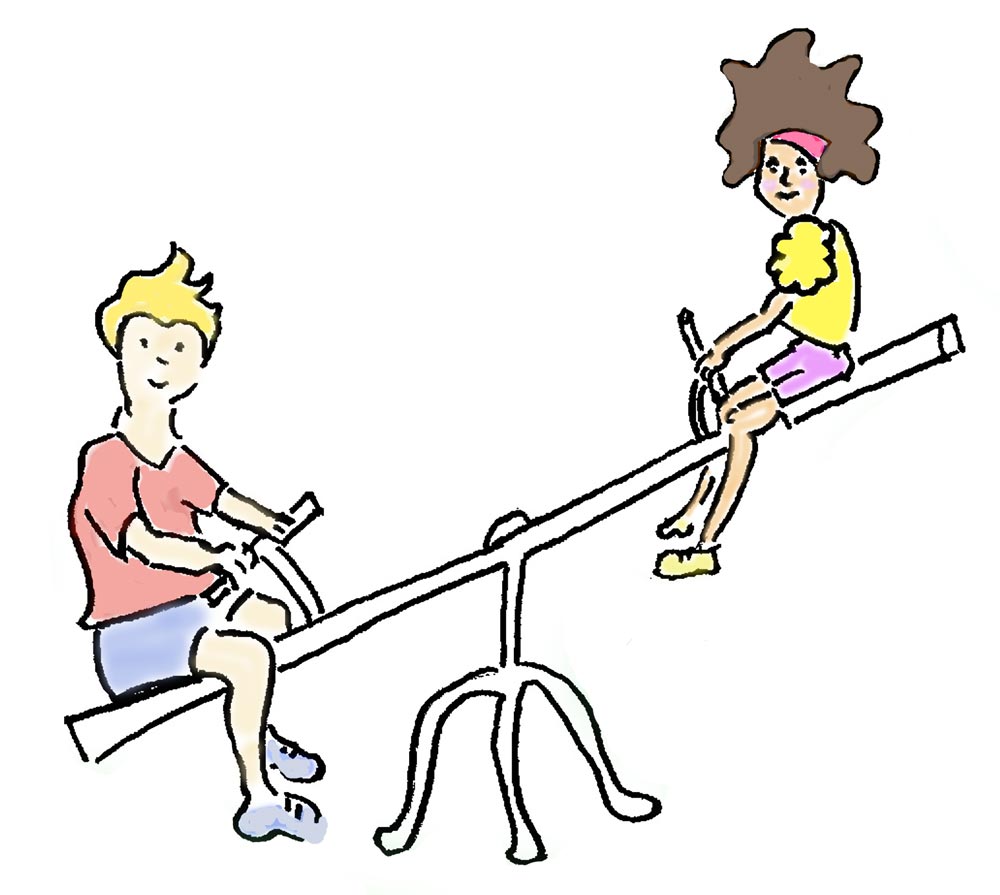
“Ours was an era of minimal expectations and neglect. Back then, there wasn’t this big expectation about getting a perfect SAT score. I don’t even remember AP classes in high school. There seems to be all this pressure these days to be an academic superstar.” ―Donna W.
[Illustrated by G. McEvoy]
“The biggest change that has happened in recent years is the expectation of instant gratification and immediate response. People expect to hear back from you right away, and I don’t like that. It adds stress and takes away some psychologyical breathing room. I make a point to only answer emails once a day.” ―Magic John
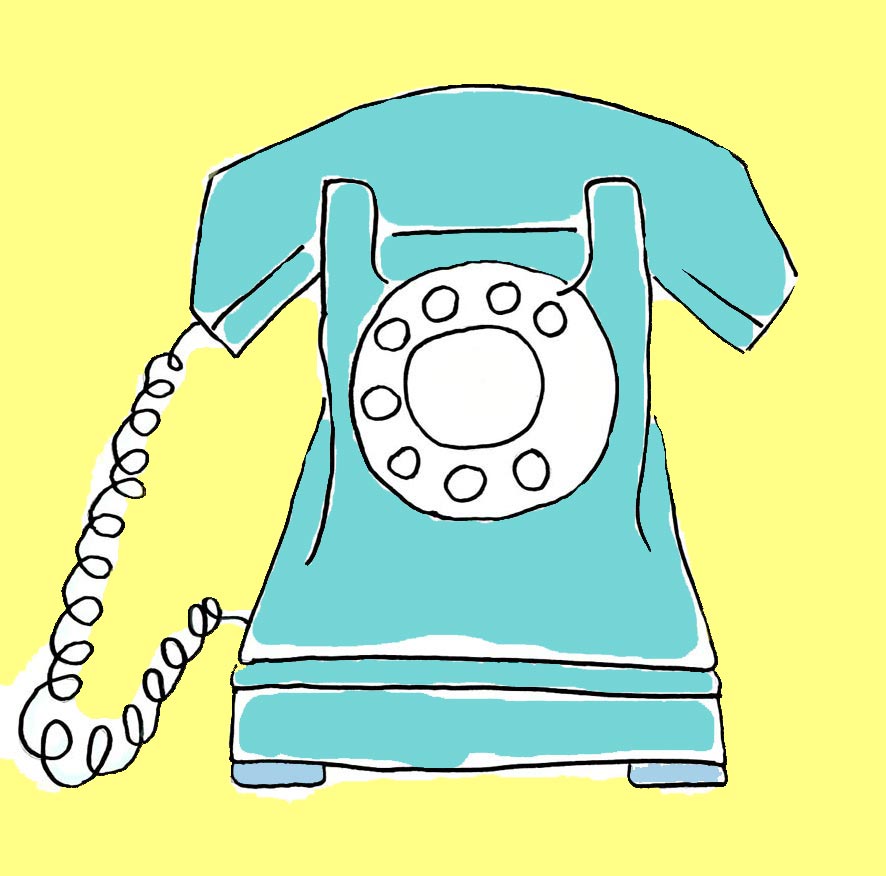
“We spent so much time talking on the phone, but the phones were all land lines and we’d have to use these rotary dials to call people to talk and we’d listen through these big clunky handhelp plastic things with curly cords. And the phones were shared by the whole family so you couldn’t talk whenever you wanted. Your mom would say, Honey, I need to use the phone, and you’d have to hang up. I remember talking for long periods at night in the hallway outside my bedroom. Such good memories!” ―Donna W.
“We didn’t have answering machines back then, and I remember sitting at the dinner table one night and someone called while we were eating and my grandfather said, ‘Leave it, if it’s important, they’ll call back.’ We prioritized different in the old days. We didn’t have to respond to most things right away. ―Magic John
“When we were kids, we used to go the public library and check out books, or we’d go to the reading room for a high school research project,” recalls Austin librarian, Donna Woods, now in her 60s. “Things have changed dramatically within libraries in the last 20 years. I can remember when I started at Austin Public Library back in 2003, students would still come up to me with reference questions or general assistance research projects. Now, I don’t ever get asked a reference question because they have the internet. I might be asked, What’s a good book to read?–but that’s about it.
“Prior to the internet, we had encyclopedias to do research or look up something. I had the Encyclopedia Britannica, and one of the benefits, besides the fact that they were well-researched and written and looked great on a shelf, is that when you looked up something, you would run into something else that was interesting to read and study. We don’t have that anymore with the internet because a topical search will yield set of results pertaining to that topic, and that’s it.” ― John
[Illustrated by G. McEvoy]
“When we were kids, we used to go the public library and check out books, or we’d go to the reading room for a high school research project,” recalls Austin librarian, Donna Woods, now in her 60s. “Things have changed dramatically within libraries in the last 20 years. I can remember when I started at Austin Public Library back in 2003, students would still come up to me with reference questions or general assistance research projects. Now, I don’t ever get asked a reference question because they have the internet. I might be asked, What’s a good book to read?―but that’s about it.”
[Illustrated by G. McEvoy]
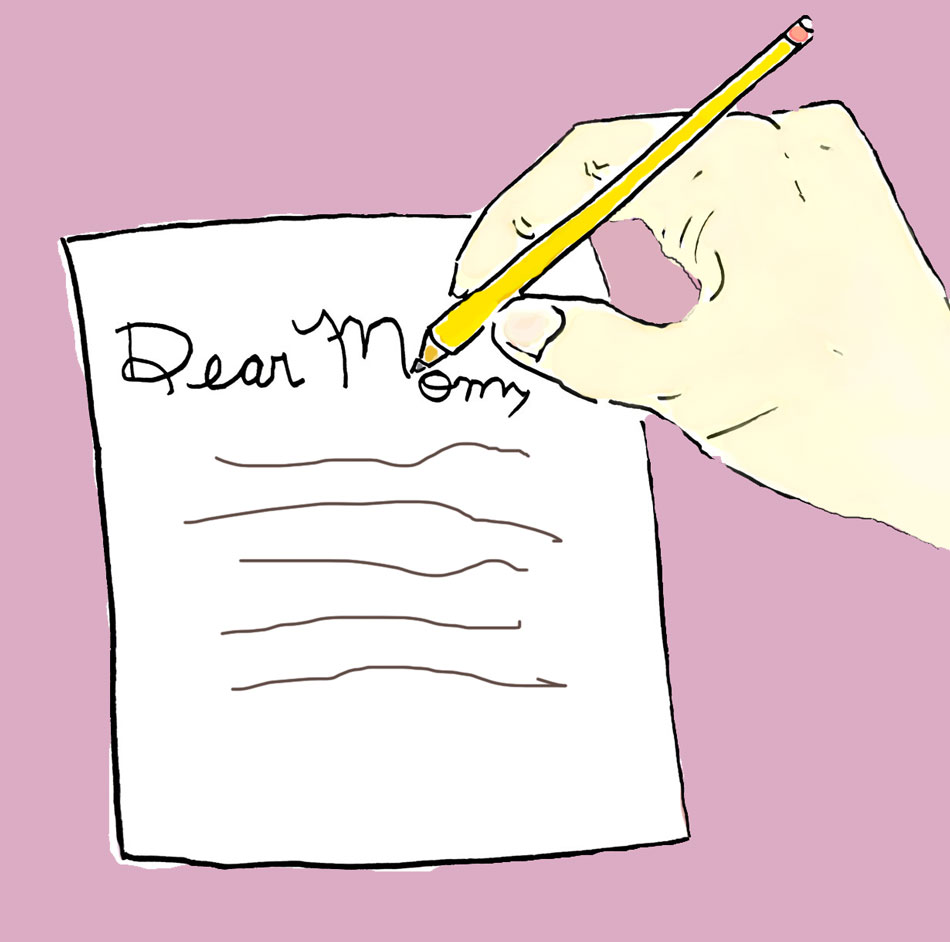
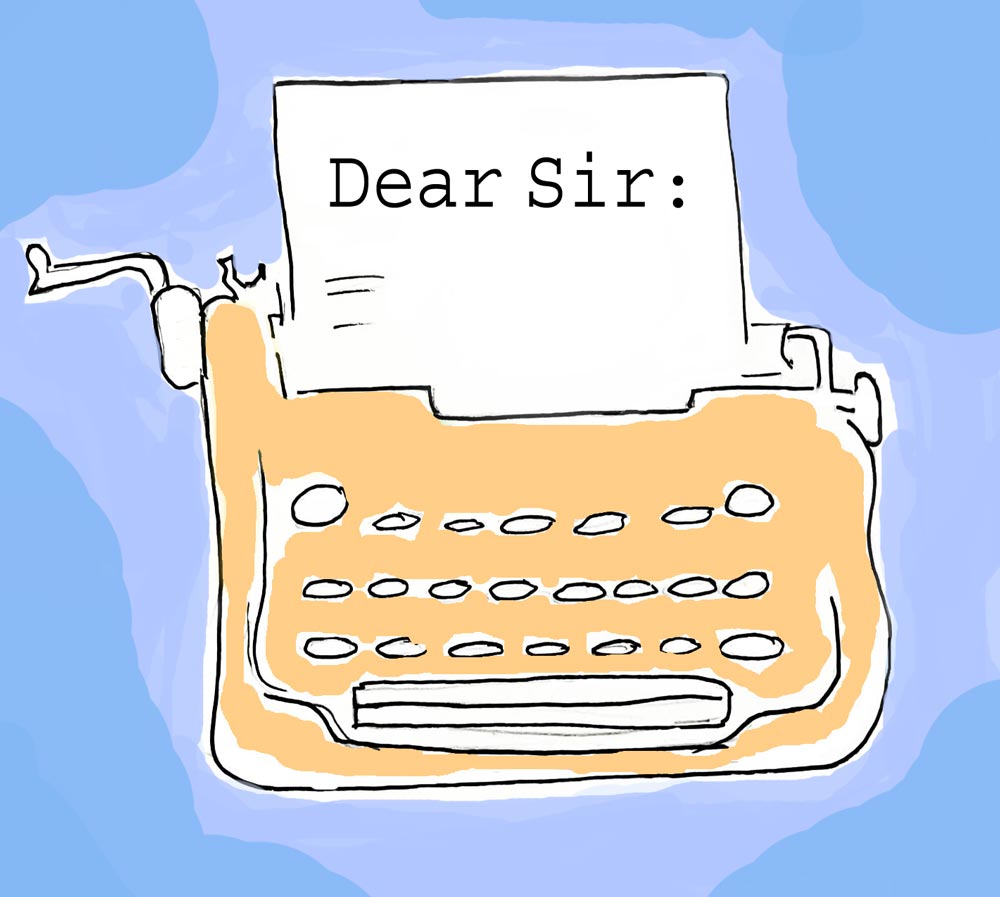
Handwritten letters and postcards!

[Illustration by G. McEvoy]
“We had to load our cameras with film and then send the exposed film off to a lab to be processed and turned into prints.
[Illustrated by G. McEvoy]
[Illustration: G. McEvoy]
In the 60s, the counter-culture youth used fashion to rebell against the established conservative norms by wearing frings vests, tie-dye shirts, maxi dresses, psychedellic prints, and peace sign accessories. The 70s took that earthy rebellious “hippie wear” and added some fun and frivolity. Platform shows, wide collars for men, and polyester suits were the rage. As disco culture emerged, some glamnmy and often outrageous outfits with bold patterns and metallic fabric added fivolity and life to city streets and the disco dance floor. Brands like Levi[‘s and Wrangler gained prominence as well, symbolizing a casual and free-spirited lifestyle.
TV Shows:
Families in the 60s would gather around the telly (often with a bowl of popcorn or a TV dinner) to watch shows like “The Ed Sullivan Show”, “The Twilight Zone”, “Star Trek”, and “The Andy Griffith Show” showcased the diversity and wide-ranging tastes in tv viewing. The 70s brought about a new wave of sitcomes and dramas that reflected the changing dynamics in American society. Shows like “All in the Family”, “The Mary Tyler Moore Show”, and “MASH” addressed timely social issues, while “Happy Days” and “The Brady Bunch” provided a nostaligic escape in the idyllic past.
“Back then, there were three major networks–ABC, NBC, and CBS–and the news was reported in a factual, respectful, matter-of-fact manner. They didnt embellish or sensationalize the news. It was straightforward and professional.” Jan in Chicago, age 73
[Illustration: G. McEvoy]
I remember collecting S&H Green Stamps in the late 60s. The stamps were issued in grocery stores and other places as a reward for shopping there, and you would fill these small booklets with the stamps and the you would cash the books in for different S&H gifts which were featured in catalogs. I wanted a pair of ice skates and my mother let me collect the stamps, and I eventually filled enough books to get my ice skate. I don’t think mother ever thought I would actually get enough books to get those skates because then she had to drive me to an skating rink for lessons…in Florida!” ―Jan in Chicago, age 73
[Illustrated by G. McEvoy]
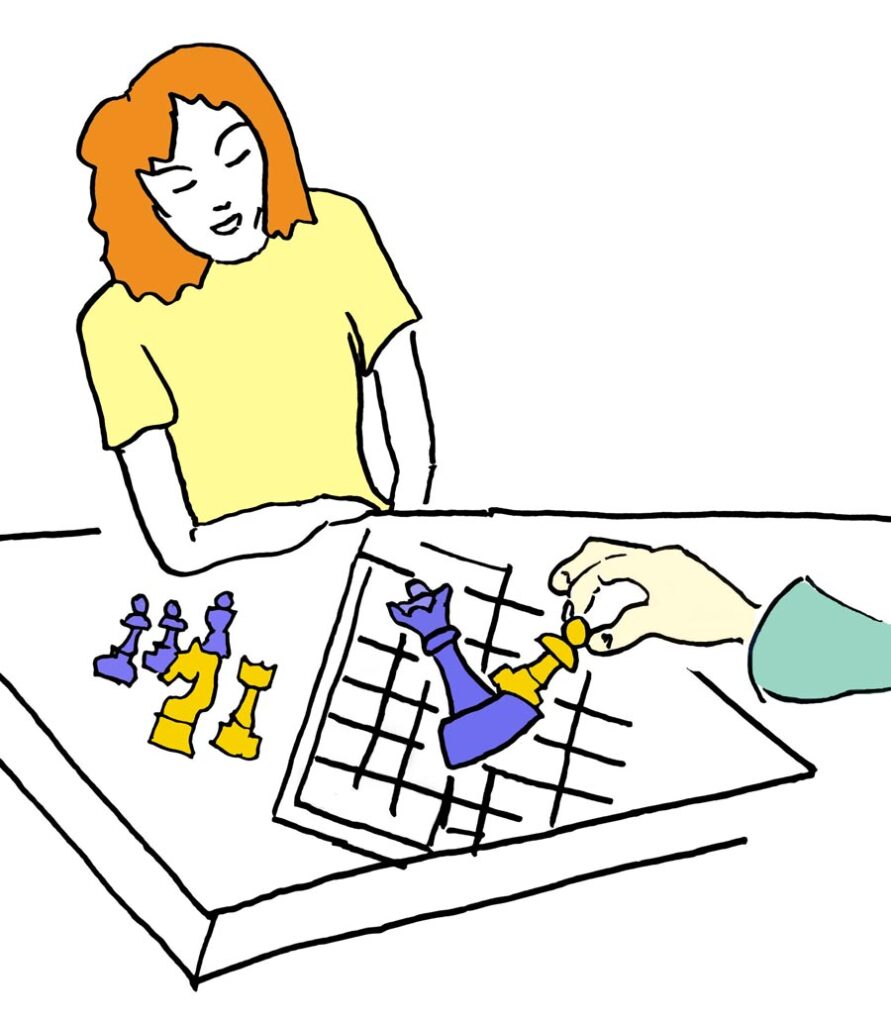
Board games like Monopoly and Clue brought families and friends together for friendly competition. Frisbees and Hula Hoops became popular outdoor activities that embodied the carefree spirit of the times. The 70s witnessed the rise of video arcades with games like Pac-Man and Space Invaders, captivating the younger generation. Roller disco became a popular patime, combining the joy of roller skating with the pulsating beats of disco music. Additionally, the emergence of Dungeons & Dragons in 1974 marked the beginning of the role-playing game (RPG) culture.
The video game Pong was released in 1972, captivating a new generation and marking the beginning of the gaming industry.